Tree Tour
Biological, Geological and Environmental Sciences
Campus Location:
Science Building (SI)
2399 Euclid Avenue, Rm. 219
Cleveland, Ohio 44115
Contact Us:
Phone: 216.687.2440
Fax: 216.687.6972
bges@csuohio.edu
White Ash
(Fraxinus americana)
Family: Oleaceae
Phylum: Anthophyta
CSU TREE MAP ITEM #26
Distribution
Native to eastern and central North America. It is found in mesophytic hardwood forests from Nova Scotia west to Minnesota, south to northern Florida, and southwest to eastern Texas. Isolated populations have also been found in western Texas, Wyoming, and Colorado, and the species is reportedly naturalized in Hawaii.
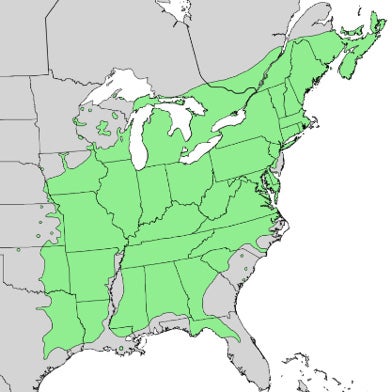
By Elbert L. Little, Jr., of the U.S. Department of Agriculture, Forest Service [Public domain], via Wikimedia Commons
Leaves
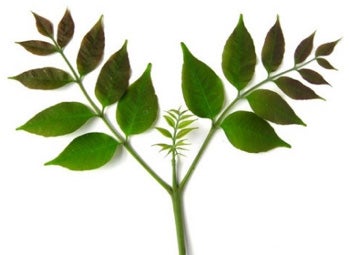
By Pedro Paramo - Pedro paramo, CC BY-SA 3.0, https://commons.wikimedia.org/w/index.php?curid=9798779
Flowering
Female Flowers
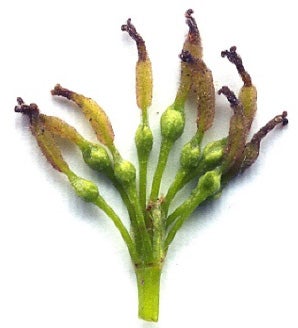
By The original uploader was Gmihail at Serbian Wikipedia. [CC BY-SA 3.0 rs (https://creativecommons.org/licenses/by-sa/3.0/rs/deed.en)], from Wikimedia Commons
Male Flowers
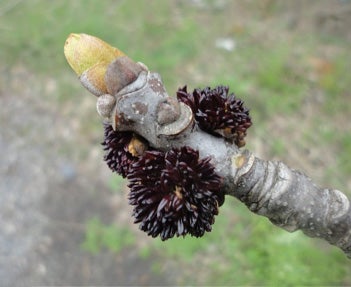
By Caromallo - Own work, CC BY-SA 3.0, https://commons.wikimedia.org/w/index.php?curid=19892891
Fruit
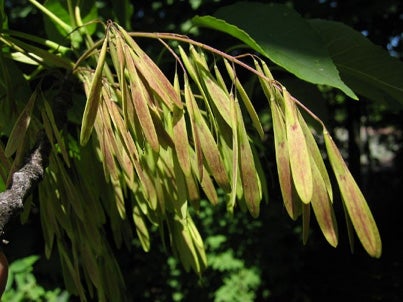
By Keith Kanoti, Maine Forest Service, USA - Image Number 5349064 at Forestry Images, CC BY 3.0 us, https://commons.wikimedia.org/w/index.php?curid=5314671
Questions
Using the bark descriptors given in the handout, describe the type of bark this tree has.
Can you observe any evidence of disease (particularly Emerald Ash Borer) on this tree? Write three indicators of either good health or disease.
Biological, Geological and Environmental Sciences
Campus Location:
Science Building (SI)
2399 Euclid Avenue, Rm. 219
Cleveland, Ohio 44115
Contact Us:
Phone: 216.687.2440
Fax: 216.687.6972
bges@csuohio.edu