RISE Program at CSU Continues to Make a Difference
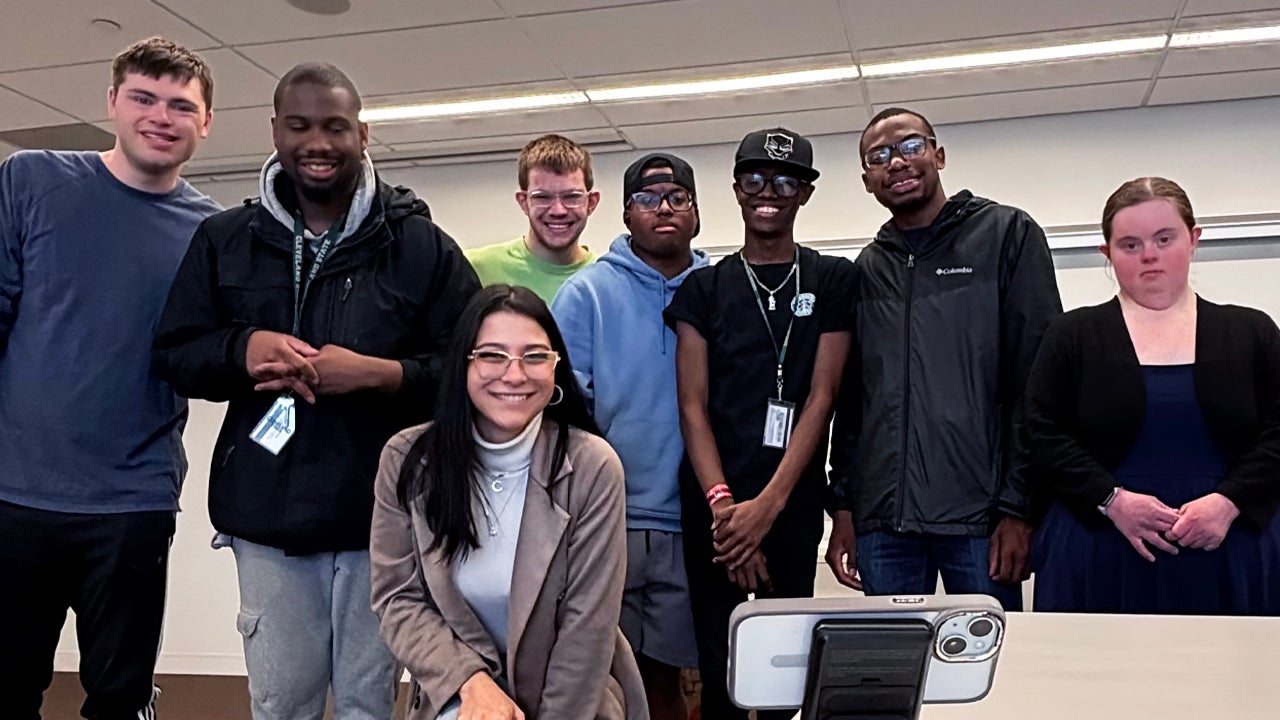
If you haven’t heard, there’s a standout program within the Levin College of Public Affairs and Education that continues to set the gold standard.
The Reciprocal Inclusive Student Experience (RISE) Program CSU includes students from Lakewood, Solon and Cleveland high schools and is reshaping higher education through inclusive learning and opportunity. RISE is a comprehensive transition program for young adults with intellectual and developmental disabilities that offers two-to four-year pathways focused on academics, career development and campus engagement.
Led by Tabitha Devine, Linda Hile and Larissa Nascimento, the team divides instruction into four classes: independent living, career development, advocacy and engagement, and goal achievement, helping students build independence, self-advocacy, autonomy, confidence and self-discovery.
According to Nascimento, supervisor of the RISE Program, the initiative has grown beyond a traditional program into what she calls a campus wide movement focused on academic, social and professional inclusion.
“The program's brilliance lies right in its name: Reciprocal,” she said. “This experience is a two-way street—while RISE students gain an authentic, life-changing college experience, the entire CSU campus and Cleveland community are immensely enriched by the unique perspectives, diverse talents, and vibrant energy these students bring.”
Beyond empowering young adults with intellectual and developmental disabilities to build vibrant, self-directed lives rooted in purpose and belonging, RISE fosters independence, connection and community.
“Our ultimate goal is to empower young adults with intellectual and developmental disabilities to build vibrant, self-determined lives,” said Nascimento. We don't just teach skills; we cultivate a sense of belonging.”
The mission is divided into two main focuses.
The first pillar focuses on empowering students for an independent future by teaching daily living and financial skills, fostering self-advocacy, supporting career readiness through local partnerships and encouraging social connection throughout the Cleveland community.
The second pillar focuses on building an inclusive campus culture by fostering a strong sense of belonging, encouraging collaboration between RISE and degree-seeking students, and increasing awareness of the program’s impact across the CSU community.
“We are in a process of growth [and] our students are increasingly integrated into the university and society in general,” said Nascimento. “We are more than a student program; we work with changing lives, teaching our students every day how capable they are of being successful. We do not work with degrees, but we help and encourage our students to take regular classes outside the program; the word TRANSITION is truly taken seriously.”
She recently cited four students who entered Cleveland State University as RISE students and are now enrolled in regular courses, pursuing degrees and preparing for future careers.
“We welcome, train, teach, prepare, and encourage our young students,” said Nascimento, adding that in recent months the collaboration between CSU and the program has strengthened, all with the goal of helping students succeed.
“We have had some professors and some professionals from the university who showed great interest in working with us,” she said. “They have promoted meetings between RISE students and students from other courses, inviting our students to events, and making themselves available for conversations and explanations about university subjects.”
Be sure to follow their progress.