Ohio’s Next Chapter in AI Education Takes Shape
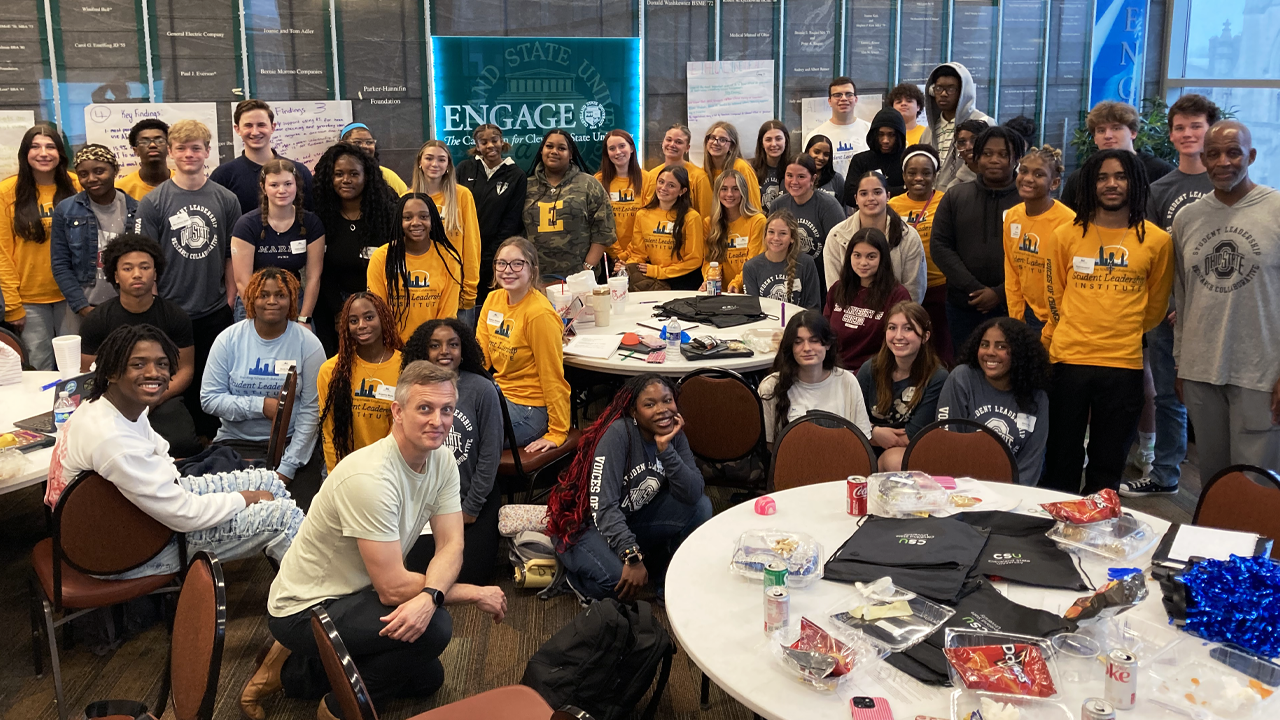
Dr. Adam Voight, Director of Cleveland State University’s Center for Urban Education, is helping high school students across Ohio bring youth voice into one of the state’s most urgent education policy conversations: how schools should respond to artificial intelligence.
The AI in Schools project grew out of two related student leadership and youth research programs that the Center for Urban Education at Cleveland State University helped create: the First Ring Student Leadership Institute and the Student Leadership Research Collaborative.
The project is part of two student leadership programs, run with Educational Service Centers in Northeast and Central Ohio, that bring high school students together to examine school issues, gather peer perspectives, analyze data and develop evidence-based recommendations for educators and district leaders.
“The original idea was to create a serious regional leadership experience for students from districts surrounding Cleveland,” said Voight. “Not just a one-time student voice event, but a sustained program where students would learn to study real issues in their schools and communities and present evidence-based recommendations to educators and policymakers.”
During the 2025–2026 school year, Year 2 and Year 3 students in the programs focused on generative AI in K–12 education. The timing was especially important: Ohio became the first state to require K–12 public school districts to adopt formal AI policies, with districts required to have policies in place by July 1, 2026.
“This year, students selected artificial intelligence in schools as the focus because it is one of the most urgent issues facing education. Districts are trying to make decisions about AI policies, academic integrity, teacher use, student privacy, equity, and preparation for college and careers,” said Voight. “But those decisions are often being made without enough direct input from students, even though students are the people most affected by those policies.”
With support from Voight, CUE postdoctoral fellow Dr. Rosalinda Godínez and Urban Education doctoral student Marquan Jones, students examined how their peers experience and think about AI in schools, focusing on academic integrity, teacher guidance, privacy, equity and future readiness, then developed recommendations to help district leaders create practical, student-centered AI policies.
“CSU has played a central role through the Center for Urban Education. CUE helped create the FRSLI and SLRC models and continues to support the research infrastructure behind the programs,” said Voight. “That includes helping design the youth participatory action research approach, supporting survey and data work, helping students and educators interpret findings, and creating opportunities for students’ research to reach school and district leaders.”
Voight said the work reflects CSU’s urban-serving mission by building partnerships with students, educators, districts and Educational Service Centers to address real-world challenges, including through the statewide, youth-led AI in Schools project.
Students have presented their recommendations to district leaders developing AI policies ahead of the state deadline, demonstrating how CSU and its partners are supporting responsible AI use while ensuring student perspectives inform the future of teaching and learning.
“One thing I would emphasize is that this is not a small “student voice” activity. FRSLI and SLRC have become a major statewide infrastructure for youth leadership, youth research, and student-informed school improvement,” said Voight. “Students are not simply being asked for opinions after adults have already made decisions. They are learning to generate evidence, interpret data, and present recommendations on issues that matter to schools right now.”