CSU Students Boost Career Readiness with Real-World Insights
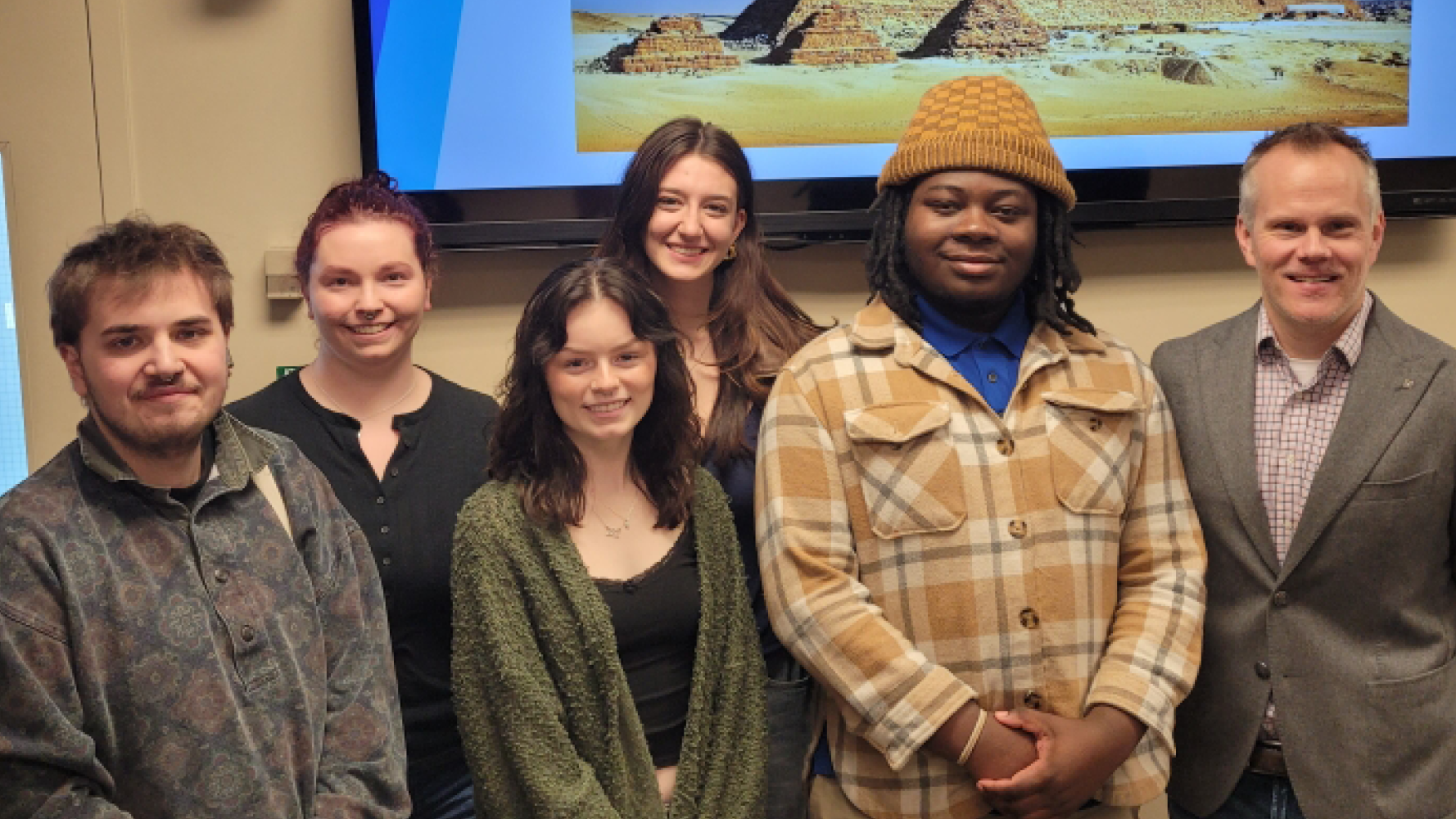
Students at Cleveland State University recently gained career insight during a campus visit from alumnus Adam Bradford, whose message focused on one theme: the power of soft skills in today’s workforce.
“Make Your Own Luck: The Soft Skills That Actually Open Doors,” was held in the Music and Communication Building and hosted by CSU’s Society of Professional Journalists chapter in collaboration with the Public Relations Student Society of America.
The event reflected CSU’s broader commitment to preparing students for career success by combining academic knowledge with real-world experience.
Bradford, a 2002 graduate, returned to campus to discuss how communication, relationship-building and adaptability have shaped his career as a finance leader at Progressive Insurance.
He said that while technical knowledge may open the door to a job, interpersonal skills drive long-term success and advancement. Early in his college career at Kent State University, he struggled because of a lack of engagement, but that changed when he began building relationships.
“I didn't have any connections [at school], I didn't know anyone in my year,” said Adam Bradford. “I wasn't really enjoying it. I realized that was because I didn't invest much in myself. I made a determination after one year that I needed to find something different."
He said that realization marked a turning point and that much of his success stems from an internship opportunity he earned after building a strong relationship with a professor following his transfer to Cleveland State University. “That conversation and those office hours I had with my professor were truly beneficial," said Bradford. “Any success that I’ve had in my career all stems from that specific situation.”
Bradford mentioned that he continued to work on the soft skills that helped build that relationship and many others afterward. Those skills included creativity, preparation, problem solving, curiosity, critical thinking, empathy, persistence, and teamwork, to name a few.
“The soft skills are what gets you promoted, what gets you the next opportunity,” he said, encouraging students to step outside their comfort zones and embrace new challenges.
“The concept of applying soft skills is what you learn by doing, you learn by action, you learn by experiencing things,” he said. “It’s chatting with someone at your first job or volunteer time. [The skills] are what gets you your job, what gets you the interview and what gets you that experience.”
Bradford also challenged misconceptions about success, particularly that it happens quickly or is based on luck. He said growth often comes from discomfort — taking on unfamiliar roles and saying yes to difficult tasks.
“If you're being asked to take on a responsibility you don't really like, you probably shouldn’t say that,” said Bradford. “In most circumstances, it's because someone sees something in you. They see potential. You've got to say yes because it will be a catalyst to different purposes or goals.”
He encouraged students to maintain a positive attitude, demonstrate effort in any task and actively seek out relationships, even when it feels intimidating. In his view, success is built over time through persistence, adaptability and a willingness to listen and learn.
Why Bringing Industry Voices into the Classroom Matters for Student Success
According to Edward Horowitz, associate professor in the School of Communication and faculty advisor for SPJ, bringing speakers like Bradford to campus plays a critical role in student growth.
“Having diverse speakers come in is a great way to expose students to different people that they wouldn’t necessarily know about from their classes,” said Horowitz.
Bradford’s perspective, in particular, stood out.
“Adam Bradford is not only an alum of Cleveland State, but he’s also not from the School of Communication… so he comes in here with a very different perspective. I think that broadens the students’ understanding of the world.”
Horowitz emphasized the importance of students actively developing their communication skills, noting that strong interpersonal interaction is essential not only in academic settings but also in professional environments, where clear expression and collaboration can set individuals apart.
“His focus today on soft skills is something that the students need help developing in a greater way because of their reliance on social media and their phones,” said Horowitz. “I've certainly seen in my own classroom how students don't generally talk to each other before class.”
He also emphasized the value of building connections with faculty, echoing Bradford’s message.
“As a professor, I particularly like his advice to cultivate better relationships with your faculty, go to office hours, get to know them better because you might walk in asking a question about your classes, but then you have another side conversation,” he said. “They get to know you better, and when projects come up, they will look to you. ‘Oh, I know this person. They show initiative, so I would like to have this person on my team to work with me or on other projects.”
From Campus Events to Internships: Making Connections that Matter
For students like Kirsten Kimbler, president of SPJ and a journalism and public relations major who graduated in May 2026, the impact of events like this reaches far beyond the classroom.
“I think events like this are incredibly important for students because it is kind of outside of the day-to-day curriculum… you don't learn those soft skills in the classroom,” said Kimbler.
Through her involvement with SPJ, Kimbler has seen firsthand how these experiences translate into opportunities.
“I've learned a lot and I've gotten internships from people who I have met at these events,” she added, highlighting the importance of networking and connection-building.
Her experience reflects a broader takeaway from the event: CSU students are not only learning in the classroom but also gaining the real-world skills and connections needed to succeed after graduation.
Kimbler said Bradford’s practical advice stood out most.
“I really liked when Adam talked about building relationships and embracing discomfort,’” she said. “I like how the skills were digestible, especially going into your first job."