CSU Professors Create Innovative Tool to Speed Access to Addiction Treatment
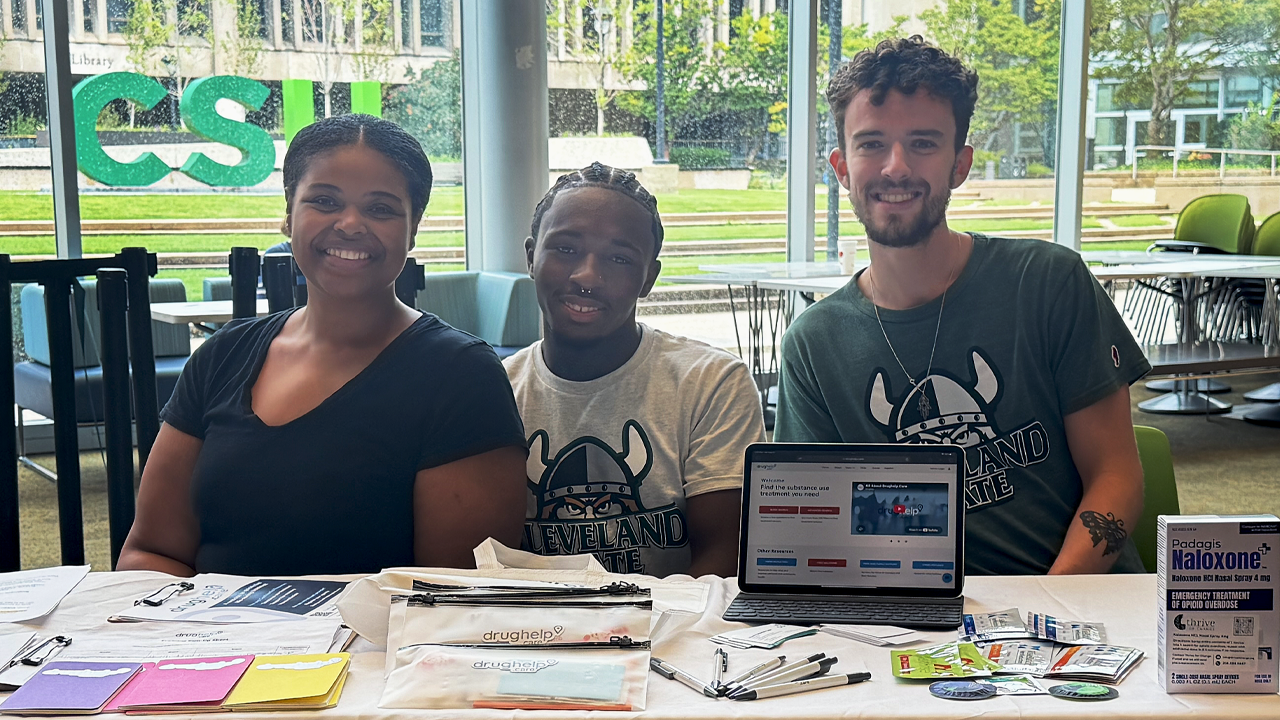
When CSU Professor of Criminology Miyuki Tedor and Professor of Social Work Patricia Stoddard-Dare created drughelp.care in 2016, they had one goal: to quickly connect people with substance use disorders to lifesaving treatment and services tailored to their needs.
The initiative has done just that.
Drughelp.care was inspired by a 2016 community meeting where residents shared frustrations about finding substance use disorder treatment for themselves or their family members. Many people sought treatment only to discover that treatment slots were unavailable or that services did not meet their specific needs, such as age or gender considerations. These barriers often caused people to abandon their search for care.
“A needs assessment confirmed that individuals and families were spending valuable time navigating a treatment system that was challenging to access, often during the brief window when someone was ready to seek help,” said Tedor.
That’s when Tedor and Stoddard-Dare decided to create a solution.
“Drughelp.care was created to improve access to treatment, reduce wait times, connect people with available services more quickly, and capitalize on the short window of time when a person is willing to voluntarily engage in recovery,” said Stoddard-Dare.
Another valuable aspect, drughelp.care goes a long way in strengthening communities by connecting people with substance use treatment services that meet their individual needs. The platform offers more than 100 search filters, including insurance type, mental health needs, treatment approaches and services for special populations such as youth and pregnant women.
It also connects users to overdose reversal medication, peer and family support, harm reduction resources and crisis hotlines to help reduce fatal and nonfatal overdoses.
“The team hopes people will gain immediate, tailored connections to care that prevent them from becoming discouraged,” said Stoddard-Dare. “To provide holistic support, we have integrated wraparound services such as help obtaining an ID or applying for Medicaid, resources for housing assistance, childcare and transportation, and search filters for hard-to-place clients.”
The platform also improves efficiency for treatment providers and social workers. Instead of spending hours contacting facilities, providers can search more than 100 criteria and view daily updates on treatment availability and waiting times. This helps them quickly identify appropriate options and spend more time providing direct care to clients.
Since its inception, drughelp.care has partnered with more than 100 substance use disorder treatment agencies and providers in Cuyahoga County. The platform lists nearly 250 service providers and 1,152 services and continues to collaborate with OD2A (Overdose Data to Action), CASE, the Cuyahoga County Board of Health, WellLink (formerly the Center for Health Affairs) and Thrive Peer Support.
A major collaborator has been the Cuyahoga County Medical Examiner’s Office, which has praised the site’s impact.
“One of the most valuable aspects of drughelp.care is its focus on reducing barriers that often prevent individuals from accessing timely support. By helping users identify services based on factors such as insurance coverage, transportation needs, age, gender, co-occurring disorders and substance use history, the platform promotes more efficient and equitable access to care,” the office said. “The work being done by drughelp.care has the potential to strengthen referral systems, increase awareness of available services and improve outcomes for individuals seeking help.”
In summer 2026, the Cuyahoga County Medical Examiner’s Office partnered with drughelp.care to serve as the landing page for a county public health campaign focused on reducing cocaine overdoses.
Tedor said future plans include partnering with local jails, homeless shelters and women’s shelters to expand access to recovery housing, treatment and wraparound services; sharing the drughelp.care model statewide; and continuously updating the platform with evolving best practices and current information from local service providers.
CSU PLAYS MAJOR ROLE
Stoddard-Dare notes that CSU has been central to the development and operation of the project, engaging more than 70 students since its inception across registration, graphic design and engineering teams. Currently, five students from Social Work, Neuroscience, Engineering, Psychology and Criminology contribute to the project, including Social Work student Jack Sierputowski’s work with drughelp.care and related research initiatives, while students in Stoddard-Dare’s addiction studies courses apply evidence-based practices to address treatment access challenges, advancing CSU’s mission of engaged learning and community problem-solving.
“Drughelp.care touches on every facet of the CSU mission,” she said. “This includes engaged learning, strategic partnerships, dedicated talent, innovative research, addressing the evolving needs of our community and equipping learners with knowledge and future ready skills.”
The campaign continues to make an impact, with 27,114 unique users visiting the site in July 2026, demonstrating the website’s ongoing reach and effectiveness.