CSU PD Sets Golden Standard with Crisis K9 Program
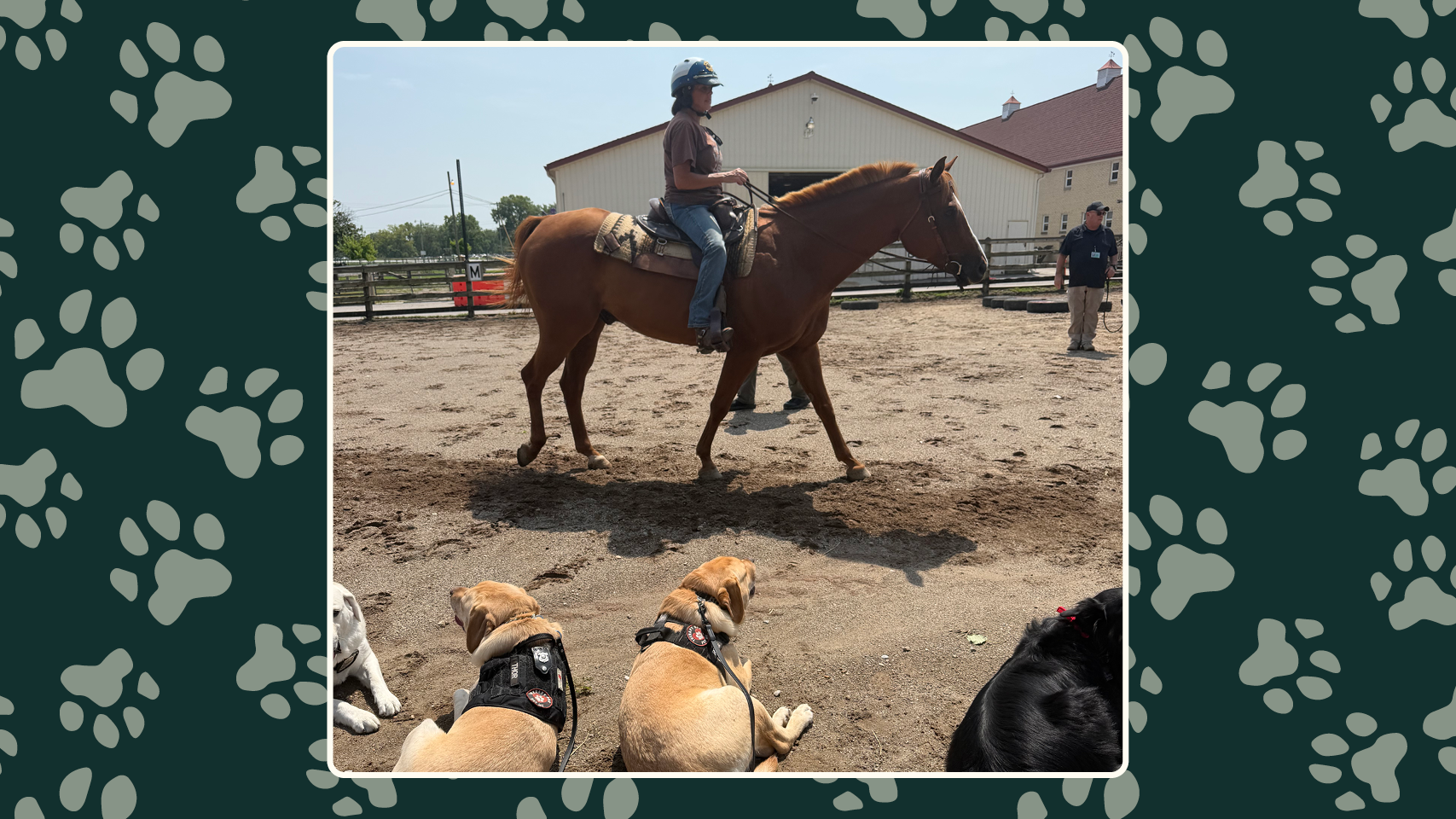
Cleveland State University’s therapy dogs are helping show what modern university policing can look like.
Now the state of Ohio is taking notice.
Rune and Thor joined the CSU’s Police Department in April 2022, before specialized state training for crisis and therapy K9s was formally available. Today, the Ohio Peace Officer Training Academy (OPOTA) offers a 40-hour Crisis K9/Therapy K9 First Response Course, giving law-enforcement agencies across the state standardized training for this emerging function.
For CSU Police Chief Beverly Pettrey, the development validates a program the department recognized as valuable from the start.
“Therapy dogs can serve an important role in modern university policing and can be much more than a community-relations initiative,” said Pettrey. “They can be an effective resource for crisis response, wellness, community engagement and relationship-building.”
Rune is partnered with Officer Toni Jones, while Thor is partnered with Officer Thomas Lear. Together, the teams have become a familiar and trusted presence on campus, working with students, faculty and staff to provide comfort, reduce stress and create positive interactions.
When CSUPD launched the program in 2022, officers researched existing law-enforcement therapy dog programs and adapted the concept to the needs of a university campus. Jones and Lear then invested significant time in training and developing the program.
The benefits, Pettrey said, extend beyond simply having a therapy dog at campus events.
“A student who may be hesitant to approach a police officer will often have no hesitation about approaching Rune or Thor,” she said. “That simple interaction can lead to a conversation and ultimately help build trust between the student and the police department.”
The dogs help officers connect with students while providing stress relief and support, and Pettrey said OPOTA’s new training is important for establishing consistent standards for agencies and handlers.
“The biggest benefit is standardization,” she said. “Formal training gives law-enforcement agencies and handlers a common foundation of knowledge, skills and best practices for operating a crisis or therapy K9 program.”
Pettrey credited Jones and Lear with turning CSUPD’s vision into a successful program. She said Jones, in particular, helped create a model for what a therapy K9 program could look like within a university police department.
“They have become ambassadors for the police department and for CSU,” said Pettrey. “They understand how to use Rune and Thor to connect with students, support people who are struggling and create positive interactions with the campus community.”
Pettrey said CSU can take pride in being an early adopter of a concept that is now gaining broader recognition in law enforcement.
“Seeing OPOTA now recognize the importance of this specialized work and offer formal training is incredibly rewarding,” she said. “It shows that programs like ours have a legitimate place in the future of law enforcement and community policing.”
Ultimately, Pettrey said, the program is about more than K9s or a new training course.
It is about relationships.
“The most important thing to remember is that this story isn't really about a designation or a training course. It's about people. Rune and Thor have become part of the CSU community,” said Pettrey. “They have helped students through stressful moments, provided comfort when people needed it, created positive interactions with police officers and helped strengthen the relationship between our department and the university community.”