CSU Doctoral Student Earns Prestigious American Heart Association Predoctoral Fellowship
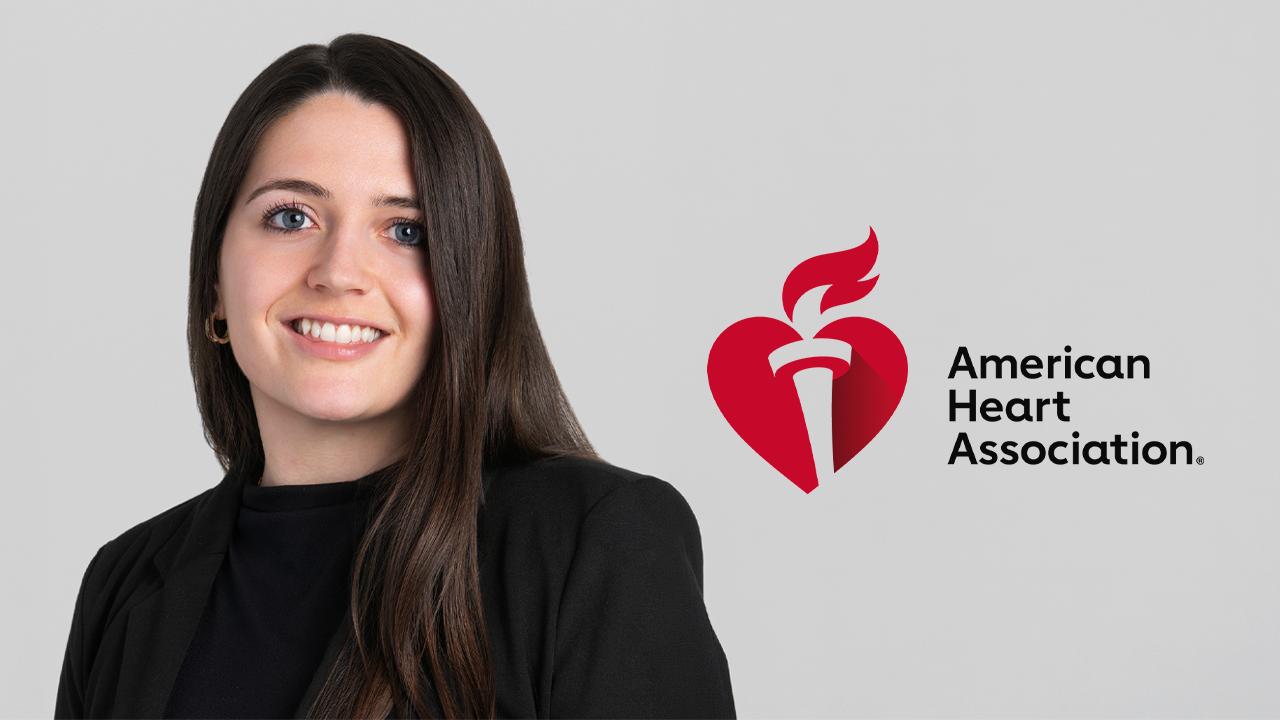
It’s been a remarkable year for Ph.D. candidate Gracie Hamilton, who is entering her fifth year in CSU’s Clinical Bioanalytical Chemistry program.
Hamilton was awarded the 2026 American Heart Association (AHA) Predoctoral Fellowship for her research investigating whether the gut microbial TMA-FMO3-TMAO pathway influences adrenal cholesterol metabolism and contributes to TMAO-related mechanisms in cardiovascular disease.
“I am just in disbelief and so thankful to the AHA for believing in my project and I think every Ph.D. student can agree that the research we do often feels humbling and can sometimes feel like for every two steps we take forward, we take one step back,” she said. “Knowing the AHA believes in my project enough to fund it is really validating.”
Hamilton explained that applying for the AHA fellowship involved a rigorous process with multiple documents, but the most important was the five-page research proposal, including a one-page specific aims section. The proposal outlined the project’s background, hypothesis, significance to the AHA mission, preliminary data and detailed methods.
“With guidance from my advisors, Dr. Valentin Gogonea (CSU) and Dr. J. Mark Brown (Cleveland Clinic), I refined the proposal and submitted additional materials, including NIH-format bio sketches and information about the research environment and training history,” she said. “The application then underwent peer review by AHA experts who evaluated the research, the feasibility of the project and the experience of the researcher and mentors. The high rating of my application led to my selection as an award recipient.”
Hamilton's grant-winning research examines whether the gut microbial TMA-FMO3-TMAO pathway influences adrenal cholesterol metabolism and contributes to the way TMAO affects cardiovascular disease. TMAO, a metabolite produced by gut microbes, has been linked to atherosclerosis and other conditions that increase cardiovascular disease risk, including insulin resistance, obesity and hypertension. Researchers believe TMAO may increase that risk by altering cholesterol metabolism in the liver, intestines and vascular macrophages.
“I was in a Clinical Chemistry class at CSU learning about adrenal endocrinology and was curious on if TMAO also altered cholesterol metabolism in the adrenals, because the adrenal cortex produces steroid hormones from cholesterol and these steroid hormones can lead to metabolic syndrome and hypertension if produced excessively,” said Hamilton. “I was surprised to find that no literature had been published investigating TMAO activity in the adrenals and so this project was born.”
Hamilton credited Drs. Valentin Gogonea and Michael Kalafatis for their guidance and support throughout the project. She specifically recognized Dr. Gogonea, her CSU advisor, for encouraging her to apply for the grant and providing invaluable research guidance and mentorship through weekly meetings.
“Dr. Kalafatis, chair of the Chemistry Department and a member of my committee, has been instrumental in my success, offering feedback on my proposal, writing a letter of recommendation and consistently supporting students in reaching their goals,” she said. “I also appreciate Dr. Yana Sandlers, a committee member who provided a letter of recommendation and supported me throughout this endeavor.”
WHAT’S NEXT
As part of the fellowship, Hamilton will continue her research and carry out the experiments outlined in her proposal. She is required to submit annual progress updates to the American Heart Association, highlighting her findings and their relevance to cardiovascular health and disease.
The fellowship provides two years of funding, though Hamilton said she plans to withdraw after the first year to complete her Ph.D. The award includes a stipend, health insurance support and $2,000 annually for research supplies.
"Because the proposal was about my thesis project, I basically get to just carry-out my research as normal; the only difference is I now have to update the AHA on my progress," said Hamilton. "My ultimate goal for this project, both for the completion of my Ph.D. and for my AHA grant, is to decipher how TMAO or the gut microbial TMA-FMO3-TMAO pathway is influencing the adrenal stress response. The purpose of this is to gain a better understanding of how TMAO drives increased risk for cardiovascular disease, since altered activity of the adrenal stress response can increase risk for cardiovascular disease."
As she begins the fellowship, Hamilton said she is grateful CSU offers the nation's only ComACC-accredited Clinical Chemistry Ph.D. program. She moved from Texas to attend CSU because of her interest in clinical chemistry and the program's national reputation.
“Under Dr. David Anderson’s leadership, the program gives students a significant advantage when applying to competitive Clinical Chemistry fellowships. CSU’s support of student organizations like the Clinical Chemistry Journal Club and attendance at the annual ADLM meeting has also provided invaluable opportunities to connect with leaders in the field and advance my career,” she said.
Hamilton added:
“I had a great support group from both CSU and Cleveland Clinic, especially my advisors, who helped review and edit my proposal and helped me compile all the different documents I needed to submit. They spent a lot of time helping me with this, and I am honored that they would use their own time to help me succeed.”