Anne Nelson Appointed to Cleveland Commission on Black Women and Girls
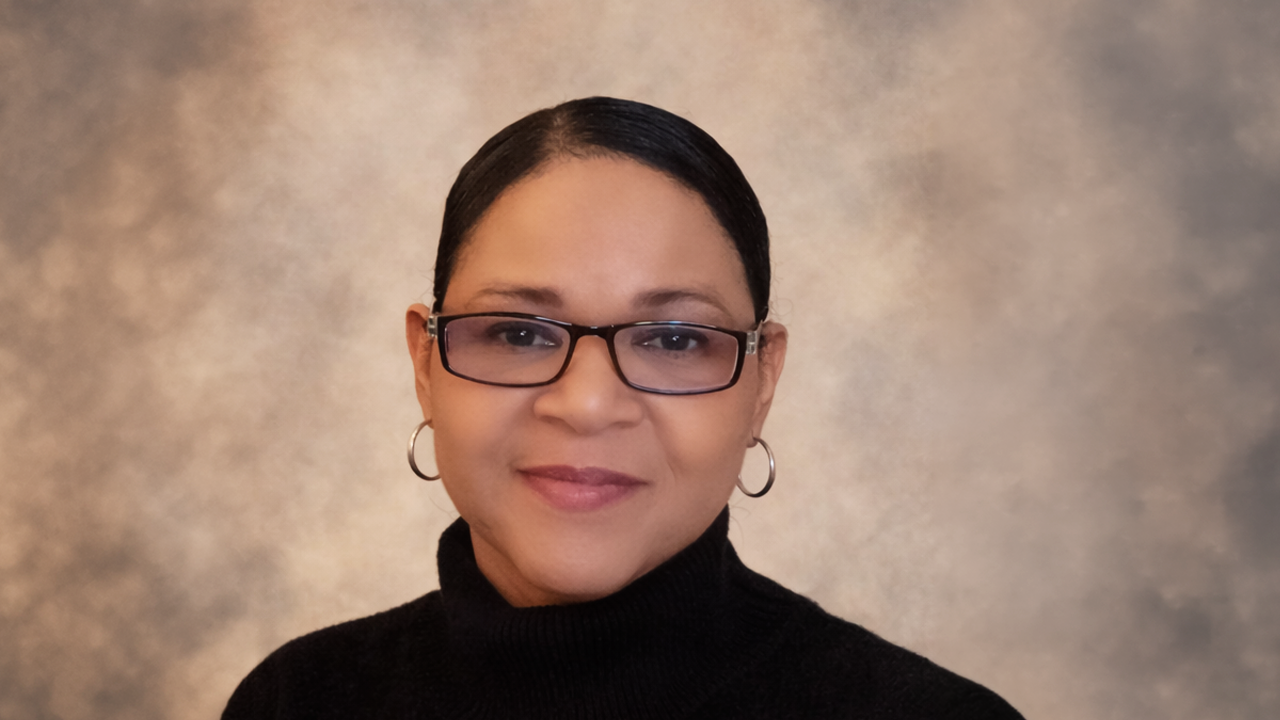
In 2024, Anne Nelson, senior assistant dean of academic affairs and student programs at the Monte Ahuja College of Business, came across an opportunity in Crain’s Cleveland Business that would allow her to make a difference.
The rest, they say, is history.
After an intensive and lengthy application and selection process, Nelson has been appointed to the Cleveland Commission on Black Women and Girls to serve as the higher education representative.
She began her two-year term in April.
“It feels strange and surreal,” said Nelson, of being known as ‘Commissioner’. “That is my official title when I attend meetings for the City of Cleveland; the only commissioner I was aware of was the commissioner of the NFL as I love the NFL and my Steelers.”
The city created the commission to study and propose solutions to the economic, educational and health disparities facing Black women and girls. Nelson’s work includes advancing key initiatives, including safety plans for girls in local schools.
Nelson, who has served on the WellLink Board since 2001, has focused her work on poverty and education issues in greater Cleveland. WellLink is an organization that supports Northeast Ohio hospital advocacy initiatives by coordinating efforts that benefit the health care community. Through that work, she learned that her childhood community of Glenville had poor educational outcomes for Black women.
“The Glenville community had high poverty and crime during my childhood, and I lived in the area until I was 26 years old, but my mother helped me stay focused and supported education,” said Nelson. “I was stunned to learn about this data, which stated according to a 2020 Bloomberg CityLab report, the City of Cleveland ranked last in Black women’s overall outcomes, last in Black women’s educational outcomes, and second last in Black women’s health outcomes."
After learning more about disparities in Glenville, Nelson said her work at CSU has allowed her to help people across races and genders, but she continues to reflect on her own childhood experiences with poverty and crime. She said she was able to pursue education through resilience and determination, despite no guarantee of success.
Nelson said she sees similar and worsening challenges facing Black women and girls in Cleveland today, including crime and gun violence. As a result, she decided to become more directly involved, saying her experience as a survivor of these issues has shaped her contributions to CSU, the Monte Ahuja College of Business and its students.
All of these factors led her to apply for the position.
“I plan to use my voice, efforts, and experiences, along with support from current and previous colleagues and family, to help push change that will impact more than just Black women and girls; as you help others, you help all,” she said. “The city of Cleveland has a large population of Black women and girls who must play a strong role in the future economic, educational, and community efforts to help make all of Cleveland and surrounding communities stronger.”
Over her two-year term, Nelson said she wants to be present for girls and women and share her experiences. She plans to develop education programs that connect learning to workforce opportunities, expand financial literacy boot camps, create a mother-daughter workforce camp, launch Cleveland State University student service initiatives to build leadership and career skills and potentially establish a Glenville Female Club.
She said the WellLink Board has expressed support for her efforts and that her goal is to build a foundation that helps participants develop the structure and confidence to pursue education, career pathways and long-term goals.
“The bottom line is, I want to provide a foundation for people to dream with the structure of support and participants who become comfortable with effort and want to work as they are exposed to things that will allow them to dream and work toward the dream with outcomes,” said Nelson.
A LASTING IMPRESSION
Looking back on her journey and the successes that followed, Nelson credits her mother not only for shaping her life but also for shaping the person she has become at Cleveland State University and in her current role on the Cleveland Commission.
“I was raised by a divorced mother of four daughters who left a violent, alcoholic marriage and raised us in poverty after my father became abusive and she had no job skills, with children ranging in age from 10 to 3. Her decision to leave and protect us taught me resilience and the importance of safety as a foundation for strength,” said Nelson. “She also emphasized individuality, allowing her daughters to be themselves and encouraging curiosity without limits.”
That lesson reinforced for Nelson that being different is acceptable when it harms no one and helped shape her more than 26 years at CSU, including over a decade serving as an assistant dean and senior assistant of color.
“She also taught me to focus on being the best “Anne” rather than defining myself by race or gender, and to build relationships and understanding across differences through continuous learning,” she said. “Perhaps the biggest thing, she instilled the belief that caring for others and giving back matters even when there is no immediate return, often saying, “There is a reason for the season,” a philosophy rooted in what I describe as her “Ph.D.” in understanding and loving people.”
She added:
“I am a vessel of many, many women who helped my mother during my childhood, along with my mother and during my time in college and service to CSU,” she said. “Therefore, I plan to serve the Cleveland Commission on Black Women and Girls from my current and previous communities of humans no matter their race or gender, as we are all humanity.”