CSU’s Adeniyi Recognized Among a New Generation of Scientists Shaping the Global Future of Quantum Technology
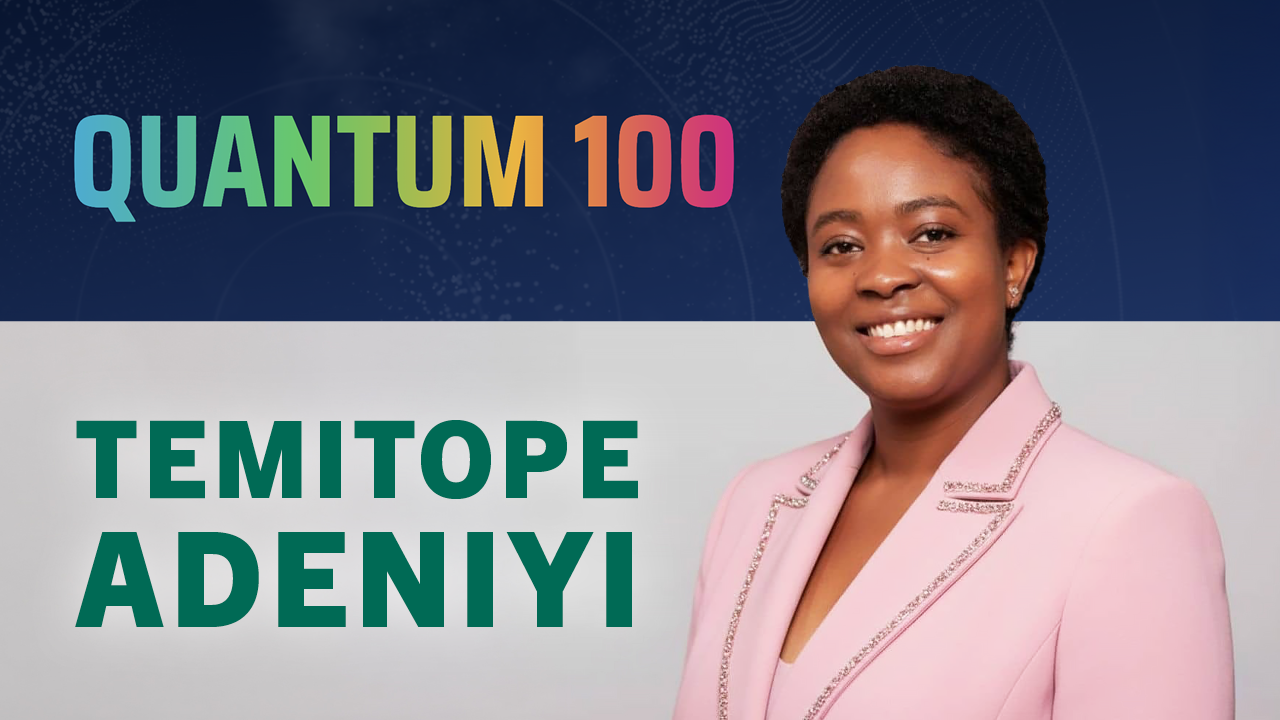
CSU Ph.D. student Temitope Adeniyi, who works in quantum computing and artificial intelligence, was recently recognized as part of the United Nations Educational, Scientific and Cultural Organization (UNESCO) Quantum 100, a list highlighting a new generation of scientists shaping the global future of quantum technology.
Members of the UNESCO Quantum 100 were selected by the International Year of Quantum Science and Technology steering committee and global coordination bureau, which is composed of representatives from IYQ founding partners, as well as leaders from universities, research institutions, scientific societies, governments and industry around the world.
“Being named to UNESCO Quantum 100 was truly humbling,” she said. “Quantum computing is a field where many people do meaningful work quietly for years, so being recognized alongside leading scientists who have inspired me and whom I deeply respect means a great deal to me.”
Growing up in Nigeria, Adeniyi’s curiosity about how the world works evolved into a lifelong commitment to discovery, innovation and inclusion in science. She has long been drawn to scientific inquiry and the challenge of understanding complex theories. During her postgraduate studies in physics, she developed a growing interest in computation and later taught herself programming to explore how algorithms interact with physical systems.
“That curiosity naturally led me to quantum computing, a field that brings together physics, mathematics and computer science — all areas I love,” she said. “What keeps me engaged is its real-world potential, especially the possibility of making an impact in areas such as healthcare, sensing and data-driven decision-making.”
Beyond her research, Adeniyi is a leading advocate for quantum education and community development. She co-designed and helped teach Cleveland State University’s first quantum machine learning course and leads hands-on outreach programs that introduce high school students to quantum and artificial intelligence concepts through collaborations with The Coding School, the Cleveland Clinic and the Cleveland Metropolitan School District.
As a driving force behind the Africa Quantum Consortium, Adeniyi champions talent development and research collaboration across Africa, helping position the continent as a key contributor to the global quantum ecosystem. Through her teaching, mentorship and global advocacy, she brings clarity and excitement to the field, inspiring the next generation of scientists to see themselves not just as learners but as active builders of the quantum future.
“I did not grow up seeing many people who looked like me working in fields like quantum computing, so being able to occupy this space now feels both personal and purposeful,” she said. “I hope my work and my presence help make the field feel more open and attainable to students who may be curious but unsure if they belong. For me, science has always been about curiosity, service, and impact, and I intend to keep using it as a tool to open doors, ask better questions, and contribute meaningfully wherever I can.”
Adeniyi also credits Cleveland State University with playing a major role in her journey, saying the university’s environment has encouraged independence, curiosity and interdisciplinary thinking.
“From my first year in the program, I was given the space to lead, explore ideas, and grow, supported by so many CSU faculty — notably Dr. Brian Davis and Chelsey Cook — who trusted my vision and believed in my potential,” she said. That level of trust made a big difference and helped me develop confidence as a researcher; in fact, I hope to continue doing research that connects theory with real-world impact, while also mentoring students who may not initially see themselves in highly technical fields here at CSU.”
“I am excited about helping build technologies and research ecosystems, particularly in healthcare and in global contexts including Africa, that make advanced tools like quantum computing and AI more accessible, practical, and useful.”