Division of Lifelong Learning and Workforce Development
Executive Director
Nancy M. Pratt, Ph.D.
n.pratt@csuohio.edu
Microgrid Systems: Certificate Program

Microgrid Systems: Foundations (Level 1)
Registration Now Open!
Course starts November 6, 2026 | Runs for Six Weeks
Last day to register is October 30th, 12 PM EST
Click to Register
Registration: $1640.00 | Early-bird Price is $1540 before October 23rd.
Course Dates Synchronous, online - Fridays, 2pm – 5pm EST
November 6, 13, 20 (no class on 27th, Friday after Thanksgiving)
December 4, 11, 18
The final class on December 18, 2026, will conclude with a virtual lab session led by guest practitioners from Direct Energy Partners, featuring a live microgrid system simulation exercise
Discounts available for organizations enrolling three or more employees.
For more information, contact Dr. Nancy Pratt at n.pratt@csuohio.edu
Dislocated Workers: This microcredential is approved on Ohio’s Workforce Inventory of Education and Training (WIET) and is eligible for WIOA funding. If you are a jobseeker or dislocated worker, you may qualify to take this course at no cost through your local OhioMeansJobs center.
Cuyahoga County residents can complete the funded training request form through Greater Cleveland Works.
For more information or to determine if you are eligible for funding, visit or call:
OhioMeansJobs Cuyahoga County
1910 Carnegie Ave., Cleveland
Monday – Friday
8 a.m. – 4:30 p.m.
216-777-8200
Microgrids Systems: Foundations (Level 1)
Electricity demand is growing at an unprecedented rate. Artificial intelligence, hyperscale data centers, transportation electrification, advanced manufacturing, and building electrification are fundamentally changing how energy is generated, managed, and consumed. These new demands are placing increasing pressure on an electric grid that was not originally designed for today's dynamic, distributed, and digitally connected energy ecosystem.
Microgrids, Distributed Energy Resources (DERs), and Virtual Power Plants (VPPs) are emerging as critical solutions for improving energy resilience, reliability, flexibility, and security. These technologies enable localized energy generation, intelligent control, and real-time energy orchestration, allowing facilities and communities to operate either in coordination with the grid or independently during disruptions.
As organizations invest in resilient energy infrastructure, demand is growing for professionals who can design, model, integrate, and manage advanced energy systems. This microcredential provides a foundation for understanding the technologies, engineering principles, and system-level thinking required to participate in the rapidly evolving energy transition.
Microgrids as a Foundation
Microgrids represent one of the most compelling real-world applications of systems engineering in practice. By integrating diverse sources of energy generation like solar, wind, natural gas, hydrogen, geothermal into advanced energy systems that incorporate battery storage, intelligent control systems and other DERs like electric vehicles, microgrids demonstrate how complex technologies can be orchestrated to achieve operational, economic, and resilience objectives.
Whether supporting hospitals, military installations, universities, commercial and industrial facilities, data centers, or critical community infrastructure, “island-mode” capable microgrids help maintain continuity of operations during grid disturbances while optimizing energy performance under normal conditions.
Understanding how these systems are designed and operated provides valuable insight into the broader transformation occurring across the electric power sector.
Systems Engineering for Advanced Energy Systems
Systems engineering is the discipline of designing, integrating, and managing complex systems across their lifecycle. It provides a structured approach for aligning technical requirements, operational objectives, stakeholder needs, and long-term performance considerations.
Through methods such as requirements analysis, system modeling, architecture development, risk management, verification, and lifecycle planning, systems engineers ensure that diverse technologies function as a cohesive and reliable whole
Systems Engineering at Cleveland State University, Aligned with INCOSE
This program introduces participants to internationally recognized systems engineering principles and practices through the applied context of microgrids and advanced energy systems.
For professionals interested in pursuing the INCOSE Associate Systems Engineering Professional (ASEP) credential, this program provides valuable preparation in key systems engineering concepts and practices covered by the certification exam. Although ASEP certification is not awarded through this program and must be obtained separately through INCOSE, participants will leave with practical, transferable skills that are highly relevant across energy, technology, manufacturing, defense, healthcare, and other complex systems-driven industries.
Careers Shaping the Energy Transition
The Microgrids Systems: Foundations (Level 1) microcredential prepares learners to understand the technical, operational, and systems engineering principles that underpin modern energy infrastructure. Subsequent courses supplementing the “Foundations” microcredential will further evolve the students capabilities to advance in these areas. These combined skills can support career growth in a wide range of emerging and established roles, including:
- Product Engineering Manager
- Grid Integration Engineer
- Lead Microgrid Developer
- Project Manager, Advanced Energy Systems
- Business Development Manager, Power Solutions
Required Text Book
Fundamentals of Microgrids – Development and Implementation
Edited by Stephen Roosa (CRC Press – Taylor Francis Group), which students purchase separately.
- ISBN: 978-0-367-53539-1 (hardback)
ISBN: 978-0-367-53541-4 (paperback)
ISBN: 978-1-003-08240-8 (ebook)
Tuition does not include the required textbook. Available at Amazon and other retailers.
Department of Energy definition of Microgrids
The Microgrid Systems series is being developed in partnership with:
- CSU’s Washkewicz College of Engineering
- CSU's Center for Integrated Modeling for Energy, Resilience, and Sustainability (IERS)
- Telepath Systems, Inc.
- Energy Learning Lab
- The International Council on Systems Engineering (INCOSE)
- The Cleveland Engineering Society (CES)
- And leading energy and systems engineering professionals
BLOCK 1: This section provides a basic understanding of electricity and its application to modern society's needs, including its origins and history of evolution to modern grid architectures and numerous emergent microgrid systems forms.
BLOCK 2: Introduces systems theory, principles, and methods, with a special focus on their applicability to Microgrids through modeling and simulation capabilities.
Key Learning Objectives, Features:
- Understanding the fundamentals of Energy, the Electric Grid, and the case for Microgrids
- Application of Systems Methods for Analysis and Design, with Model-based methods
- Learning Modeling & Simulation with Digital TWINS with application for Microgrids
Recommended prerequisites:
- Completion of basic undergraduate (sophomore level) engineering coursework– OR
- Completion of a technical Associate Degree from an accredited community college – OR
- Military experience in a technical capacity in energy – OR
- Equivalent industry experience in a technical capacity
Expert Instruction
The course is developed and taught by leading faculty and industry experts, blending theoretical foundations with practical skills.

Jeremy Ross
Jeremy Ross, CSEP, is a Senior Systems Engineer at Ford Motor Company’s Research and Advanced Engineering division, where he leads automated-driving system architecture and functional safety development. He is an adjunct instructor at the University of Detroit Mercy, focusing on model-based systems architecting and coupled architecture-simulation methods using SysML. Jeremy holds degrees in Mechanical Engineering (BSE, MSE) from the University of Michigan and in Product Development (MS) with a Systems Engineering certificate from the University of Detroit Mercy. He is a Certified Systems Engineering Professional (CSEP) through INCOSE, the International Council on Systems Engineering.
John Juhasz, CEO - Telepath Systems, Inc.
John Juhasz is Founder and Executive Director of Telepath Systems, Inc., a nonprofit advancing systems thinking to address complex energy and infrastructure challenges. He leads the Energy & Mobility Conference in Cleveland, a growing cross-industry platform supported by NASA, INCOSE, InfraGard, and others.
In partnership with Cleveland State University, John is helping shape the next generation of the energy workforce through advanced microgrid training programs that integrate systems engineering, modeling, and real-world application.
He brings nearly two decades of experience at NASA Glenn Research Center supporting the International Space Station, with leadership roles across engineering, program management, and executive operations. He holds nine patents in automotive electronics and contributed to innovations in adaptive braking, vehicle diagnostics, and connected vehicle systems at GM Europe.
An INCOSE lifetime member and working group co-chair, John is known for bridging technical depth with strategic vision. He holds BSEE and MSEE degrees from Cleveland State University and an MBA from the University of Detroit.
Guest Lecturers
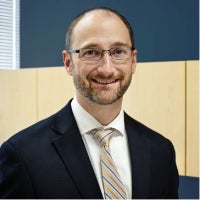
Joe Hofstetter P.E., CEM,
Principal, Director of Building Performance and Sustainability - Karpinski Engineering
Mr. Hofstetter helps organizations maximize the use of their building assets, focusing on energy, sustainability, and system operational improvements. Big-picture thinking is an integral part of his job. Every organization has different priorities, whether it’s facility improvements or sustainability initiatives, and he works with clients to define their building performance goals, develop and implement solutions, and then measure the results.

Matthew Hause - Principal Consultant at SSI.
Mr. Hause was previously an Engineering Fellow at PTC, a member of the OMG SysML specification team, and the co-chair of the UAF (Unified Architecture Framework) group. He has been developing complex, real-time systems for over 40 years. He started out working in the Power Systems Industry and has been involved in Process Control, Communications, SCADA, Distributed Control, military systems, and many other areas of real-time systems.
His roles have varied from project manager to developer. His skills include mentoring, sales presentations, standards development, and training courses. He has written a series of white papers on project management, Systems Engineering, architectural modeling, and systems development with UML, SysML, and Architectural Frameworks. He has been a regular presenter at INCOSE, the IEEE, BCS, the IET, and other conferences. Matthew studied Electrical Engineering at the University of New Mexico and Computer Science at the University of Houston, Texas.

Chris Evanich (MBA) New Energy Landscape Commercial Leader at Schneider Electric
Mr. Evanich is an electrical engineer with two decades of experience in the electrical power industry and has developed and financed dozens of distributed generation projects across multiple technologies around the world. He has delivered more than 100 industry presentations and has been published in more than a dozen different publications worldwide.
He holds a Bachelor of Science in Electrical Engineering from Cleveland State University and an MBA from Case Western Reserve University.
Executive Director
Nancy M. Pratt, Ph.D.
n.pratt@csuohio.edu